Compare
Te Anau or Waitomo glowworms?
Which New Zealand glowworm caves should you see? The Te Anau cruise-and-boat trip beside a Waitomo cave walk, compared on access, cameras and what you do.
Book the glowworm caves ↗Quick answer
Neither is better, because they are different trips on different islands. Te Anau, on the South Island, is a lake cruise, a guided cave walk and a silent boat ride in a cave still being cut by a river. The Waitomo option compared here is a 90-minute guided walk through Ruakuri Cave on the North Island, with wheelchair access and photography permitted. Choose by where your route goes, and by whether you can use a camera.
The short answer
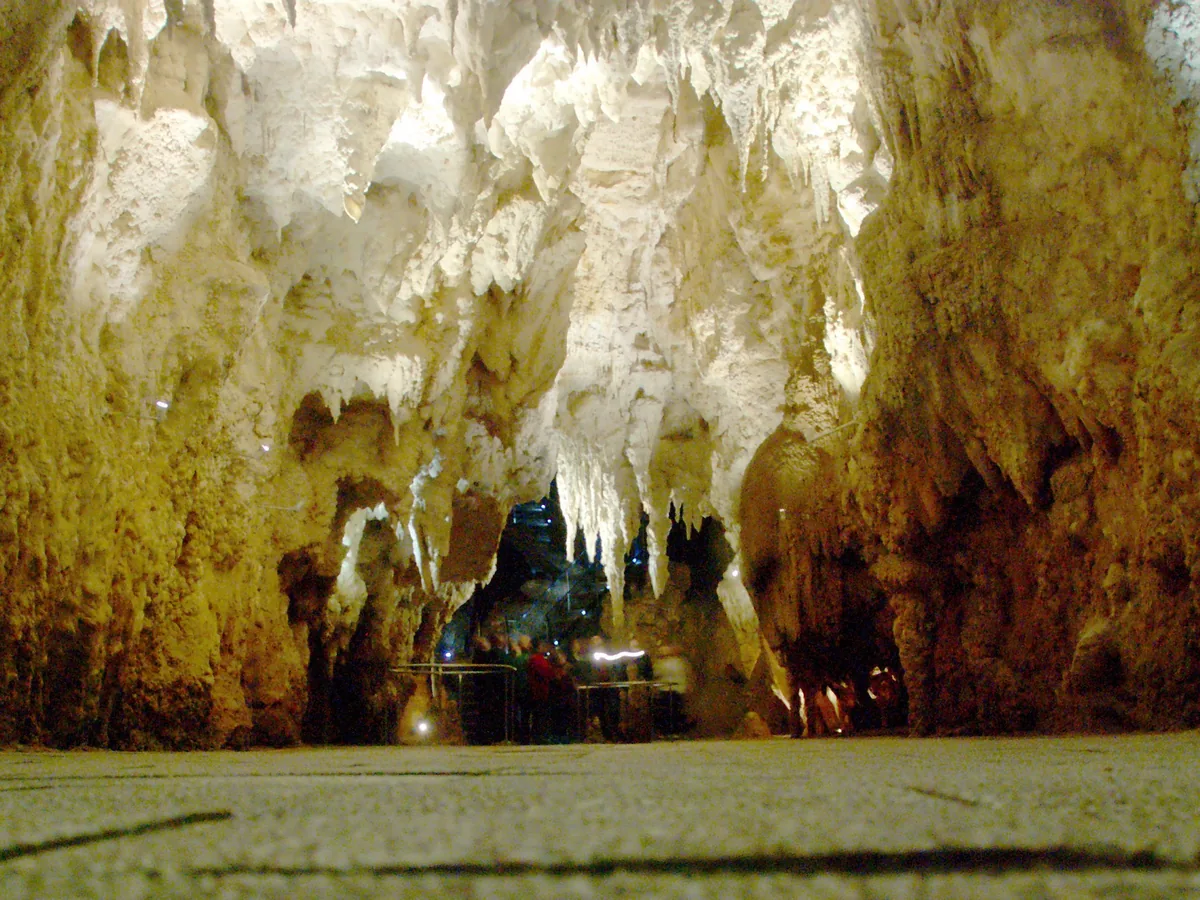
They are not competitors so much as two kinds of trip. Te Anau is a South Island day with a lake crossing, a river-cut cave and a silent boat ride under the glowworms, and cameras are not allowed in the cave. Waitomo is a North Island cave walk, and the booking compared here is a guided tour of Ruakuri Cave in which photography is permitted. If your route passes both, they do different jobs, and seeing both is reasonable. If it passes only one, take the one on your route. Both come with strong reviews, so the choice is about fit.
- Te Anau: cruise, walk and a silent boat ride, with no cameras in the cave
- Waitomo (Ruakuri): a 90-minute guided walk with step-free access and photography allowed
- Route and access usually decide it, not quality
Two islands, two caves
The Te Anau caves are on the western shore of Lake Te Anau in the Murchison Mountains, in the south-west of the South Island, and are reached across the water. Waitomo is a rural community in the King Country region of the North Island, and its caves formed in limestone from the Oligocene epoch, says Wikipedia. The name Waitomo joins wai, water, and tomo, a doline or sinkhole, so it can be read as water passing through a hole. You would not normally choose between the two on geography, because they are on different islands. The Te Anau caves carry the Māori name Te Ana-au, which Wikipedia renders as the cave of swirling water.
How you get inside
At Te Anau you cruise across the lake, see displays at the entrance, walk the passages with a guide and finish in a small boat. The Ruakuri booking describes a spiral entrance, a guided walk with a local guide and features named Holdens Cavern, The Drum Passage, The Pretties and The Ghost Passage. It does not describe a boat. Waitomo's best-known boat ride is in a different cave, the Waitomo Glowworm Cave, where Wikipedia says the guide pulls the boat along an overhead wire. Check which product includes the boat before you book.
The rock and its age
The Te Anau caves are limestone and, by Wikipedia's estimate, about 12,000 years old, which it calls geologically young. A river, Tunnel Burn, is still cutting them. Waitomo's limestone is older, from the Oligocene epoch, and Ruakuri has stalactites and stalagmites that the booking says formed over millions of years. The Ruakuri booking also calls it the longest of Waitomo's underground caves. The Waitomo Glowworm Cave, a separate cave, has about 1,300 metres of passages on two levels, Wikipedia says. Neither tour covers a whole system: the Te Anau operator describes the Aurora system as 6.7 kilometres long on four levels, and Wikipedia describes the Waitomo Glowworm Cave as part of a streamway system that includes Ruakuri, Lucky Strike and Tumutumu Cave.
The glowworms
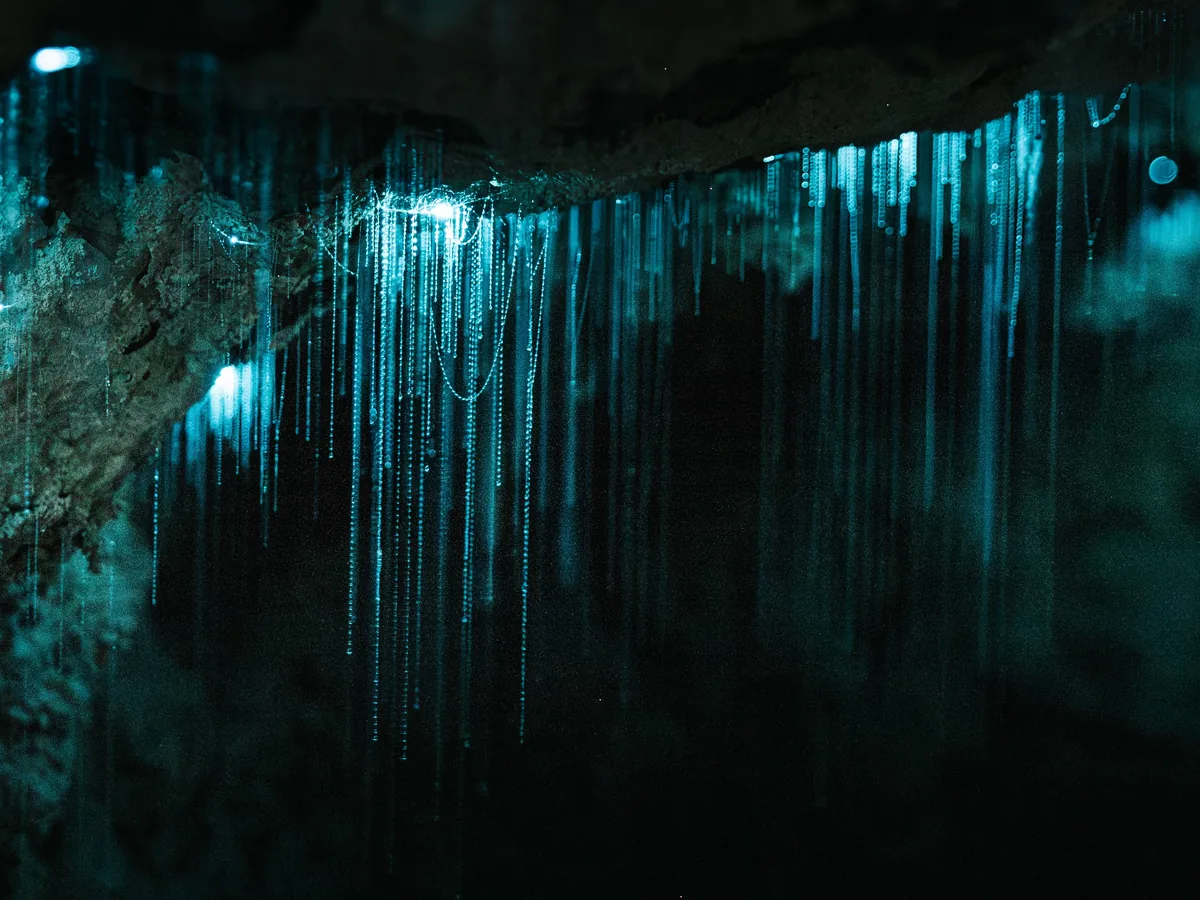
Both islands have the same animal. Wikipedia says Arachnocampa luminosa is found only in New Zealand, on both the North and South Islands, in caves and in humid native bush. At Te Anau the booking describes thousands of glowworms in a silent grotto reached by small boat. The Ruakuri booking promises thousands of glowworms among formations and subterranean rivers. Nobody can promise a number on a given day, and neither booking should be read as one. The setting differs more than the animals: a silent drift on water, or a walk beside the stream. Wikipedia adds that the larvae, not the adults, make the display, and that the larval stage is the longest in the life cycle, lasting up to a year.
Access and cameras
Access and cameras are the sharpest difference. At Te Anau the booking rules out wheelchair users, people with limited mobility and anyone in heels, citing low entrances and steps, and cameras stay outside the cave. The Ruakuri booking says the cave has full wheelchair and pushchair access, and Wikipedia says it is reached by a spiral ramp. The Ruakuri booking also says photography is permitted and backpacks are not allowed. If you need step-free access or want your own pictures, that settles it. The Te Anau operator says its camera ban exists to enhance the visibility of the glowworms for all guests.
Two discovery stories
Wikipedia says Lawson Burrows rediscovered the upper entry to the Te Anau caves in 1948, after three years of searching, following clues in old Māori legends. At Waitomo, Wikipedia says the Māori guide Tāne Tinorau showed surveyors the stream entrance of the Waitomo Glowworm Cave in 1884, and that in December 1887 he and Fred Mace entered by raft and explored by candlelight. Ruakuri was open to the public from 1904 until 1988, then reopened in 2005, says Wikipedia. Both caves were known to Māori long before European visitors arrived. Wikipedia adds that descendants of Tāne Tinorau receive a share of the Waitomo Glowworm Cave's revenue. The Te Anau operator says that for years its cave existed merely as part of Māori legend.
What reviewers say
Both bookings carry strongly positive reviews. At Te Anau, visitors praise the silent boat ride, the guides and the staff, and one warns the dark may not suit anyone claustrophobic. At Ruakuri, a reviewer says the guide knew the cave well and clearly loved the work, and another notes how accessible it was, while warning that you need to bend in places or you would bang your head. Low spots exist at both caves, so wear sensible shoes and expect to duck.
Pace and getting there
The Te Anau trip starts at the lakefront check-in and lasts about 135 minutes including the cruise across and back. The Ruakuri booking gives a 90-minute walking tour and says you must arrange your own transport. It also says Ruakuri is a further drive from the Waitomo Glowworm Cave visitor centre, so check the meeting point rather than assuming. A late arrival forfeits the ticket on that booking. Both dates show their own times in the calendar, and this site gives none. The Te Anau booking says to check in at the lakefront visitor centre, while the Ruakuri booking gives a meeting point on Tumutumu Road in Waitomo.
How to choose
Start from your route. If your route is on the North Island, Waitomo is the cave to look at. If you are basing yourself in Te Anau for Fiordland, the lake cave is the one beside you. Then check the practical fit: step-free access favours Ruakuri, a silent drift on the water favours Te Anau, and your own photographs favour Ruakuri. Both bookings offer free cancellation on GetYourGuide, so a change of plan costs little. Neither choice is wrong. A reviewer who picked Waitomo on a wet drive found it worth doing, and a Te Anau visitor called the silent boat ride the most exciting part.
- On the South Island, in Fiordland: Te Anau
- On the North Island: Waitomo
- Need step-free access or want photographs: Ruakuri
- Want a silent boat drift: Te Anau
Who this isn't for
Anyone hoping for a ranking. A single score would flatten two different trips, and the two bookings are not even the same kind of product. Anyone who expects to see one place from the other: they are on different islands, so combining them is a matter of travel, not a day trip. And anyone who wants a boat ride at Waitomo from this comparison, since the Ruakuri tour described here is on foot. Nor is either trip a substitute for the other if your priorities are a silent boat ride, step-free access or photographs: those points differ, as the table on the home page shows.
Frequently asked questions
Which is better, Te Anau or Waitomo?
Neither. They are different trips on different islands. Choose by your route, whether you need step-free access and whether you want to take photographs.
Can I take photos at Waitomo?
At Ruakuri, yes: the booking says photography is permitted. Te Anau does not allow it inside the cave, so check each booking separately.
Which has the silent boat ride?
Te Anau. Its tour ends with a small boat into a silent grotto. The Ruakuri booking describes a walking tour and no boat.
Is Waitomo wheelchair accessible?
The Ruakuri booking says the cave has full wheelchair and pushchair access. The Te Anau booking says its tour is not suitable for wheelchair users.
Are the glowworms the same?
Yes. Wikipedia says Arachnocampa luminosa is found only in New Zealand, on both the North and South Islands.
Sources